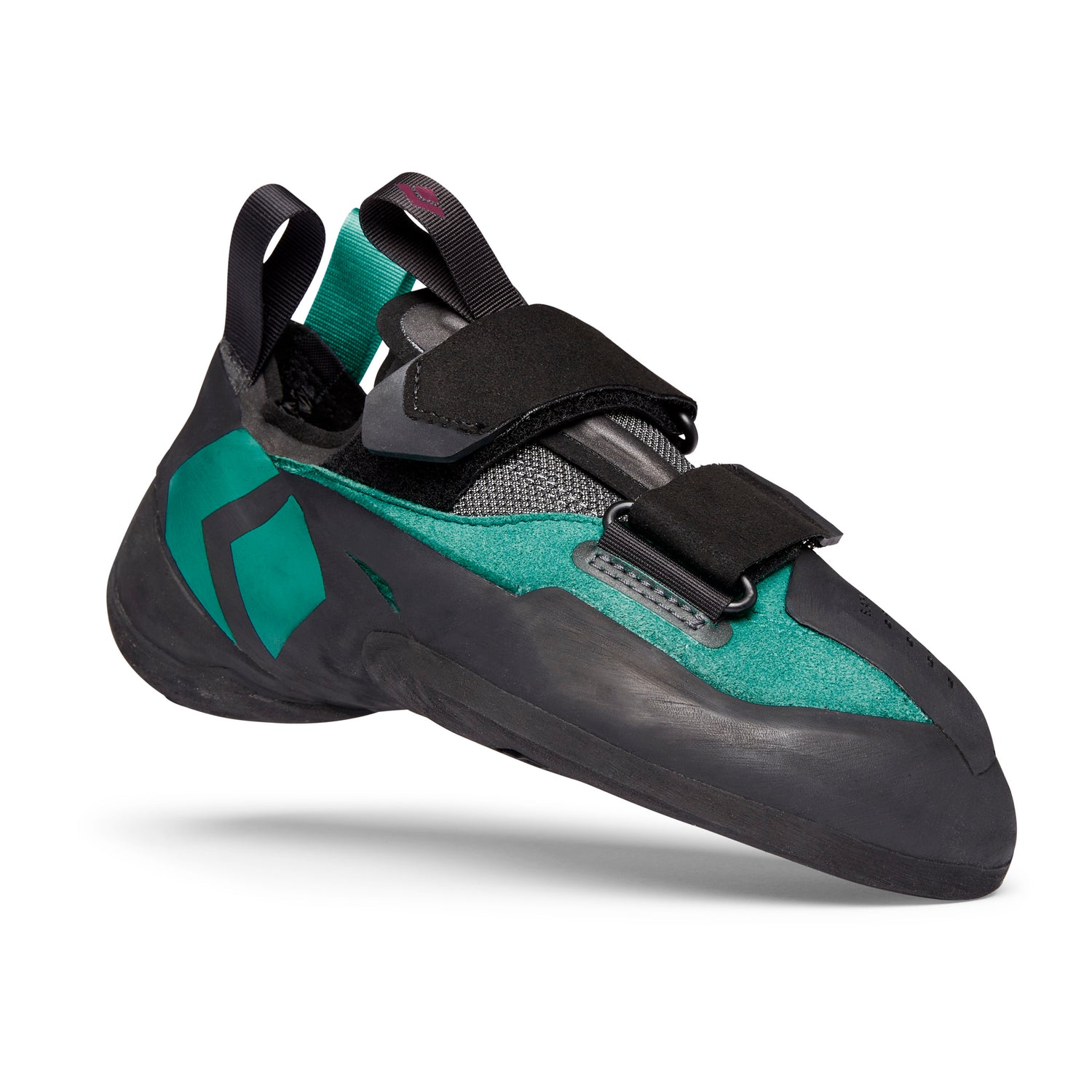
Choosing the right pair of shoes is a crucial step for success, from gym bouldering to traditional multi-pitch routes.
Buying your first pair of climbing shoes is an opportunity to have your own rock climbing Cinderella moment. Try on as many pairs as possible, and eventually, you’ll find the one that fits just right. Looking for a pair of climbing shoes online is possible, but it requires more research and attention to detail. That’s where we come in. This article will outline the basics and provide a path to selecting your next pair of climbing shoes.
Before hitting the virtual shelves, you’ll want to be clear on what type of climbing you plan to do and your overall climbing experience. These factors all play a role in your selection.
Are you psyched on slabs? Obsessed with cracks? Training relentlessly in the gym? Maybe it's all of the above. Do you need a shoe that’s flat or downturned, stiff or soft, symmetrical or asymmetrical? These questions will help guide you toward different types of shoes.
If you spend more time on low-angle to vertical terrain, a flat, stiffer shoe with minimal asymmetry is ideal. For cracks, you may want extra ankle protection. An asymmetrical, downturned shoe will help you toe in with more power on steeper terrain.
If you are new to climbing, chances are you’ll be more comfortable in a flat shoe rather than an overly aggressive one, which can have a longer break-in period. In terms of sizing, it comes down to personal preference. A climbing shoe should be snug but not overly tight. It takes a little while to get your feet accustomed to the fit of climbing shoes, so generally, if you’re just starting, you’ll probably want to size your shoes pretty comfortably right out of the box. We’ve categorized our shoes below to help you narrow in on the right pair, considering fit, climbing style, and features.
YOUR FIRST PAIR OF CLIMBING SHOES
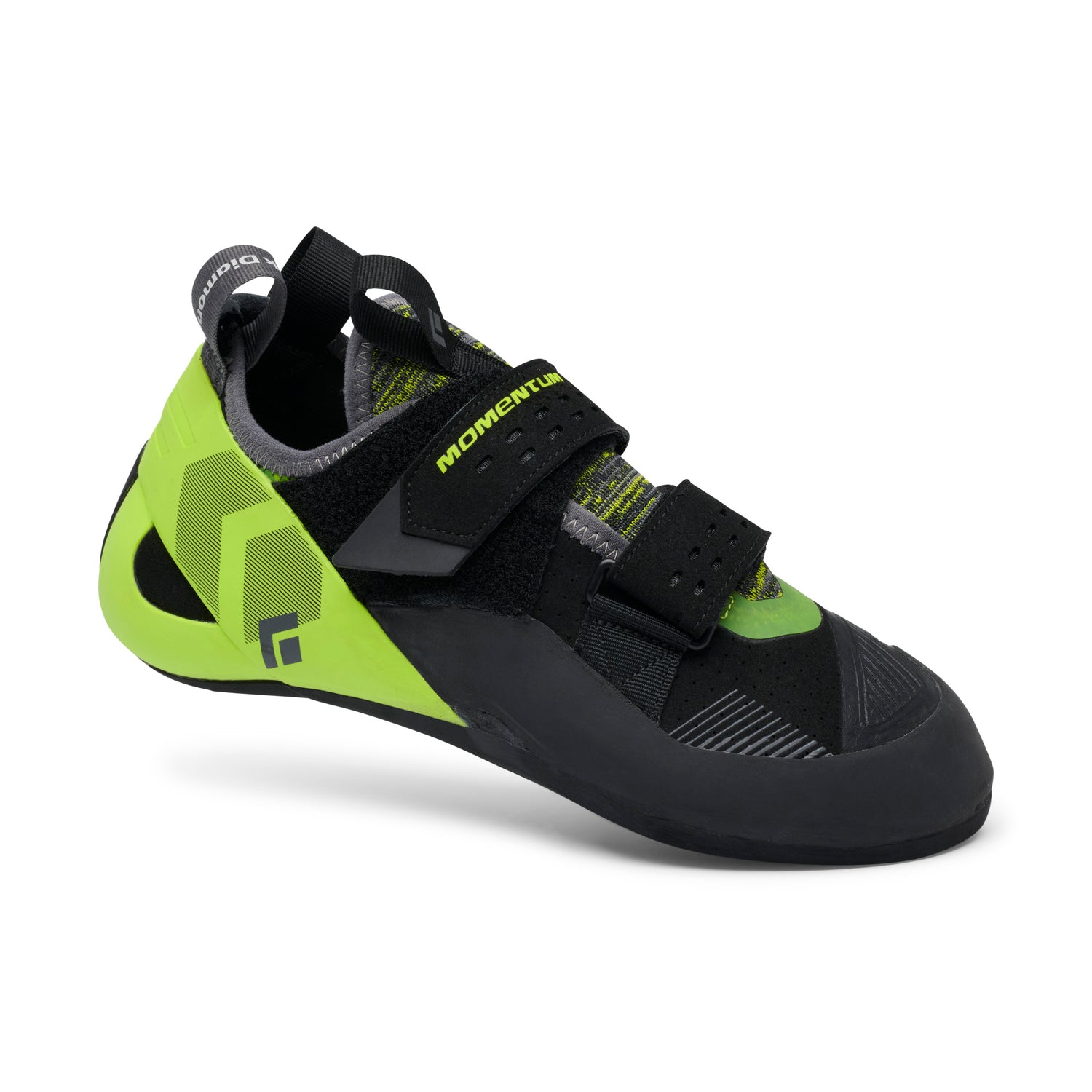
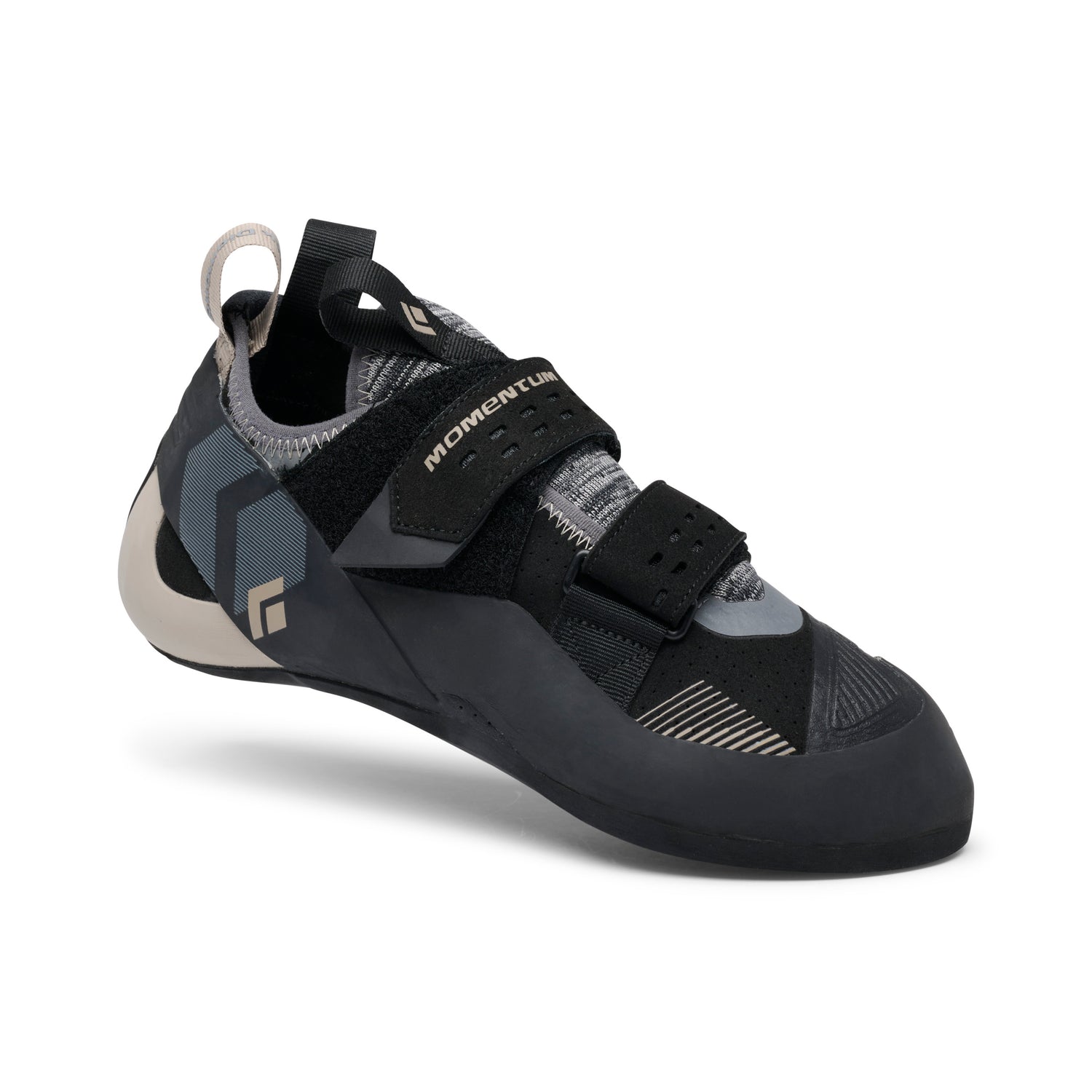
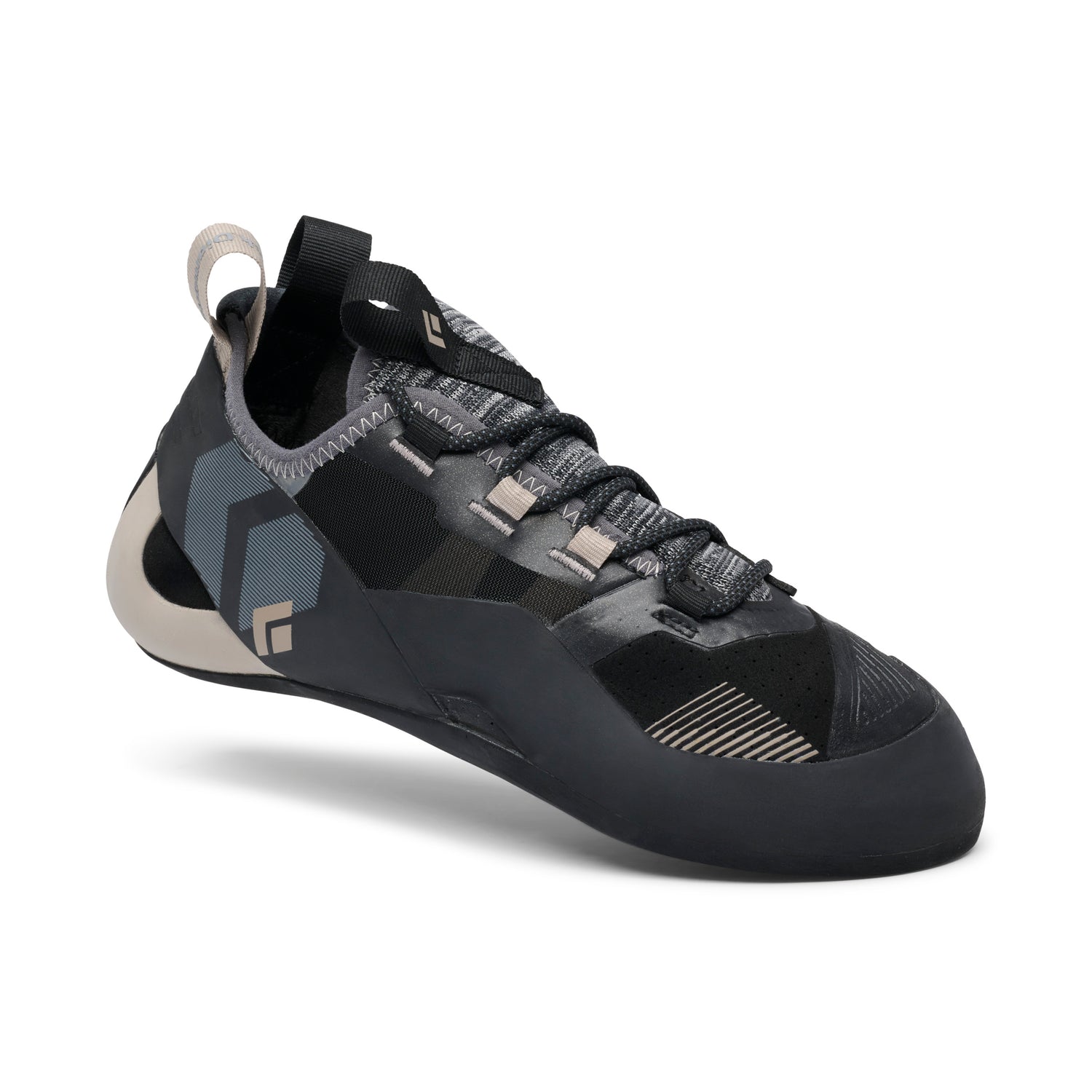
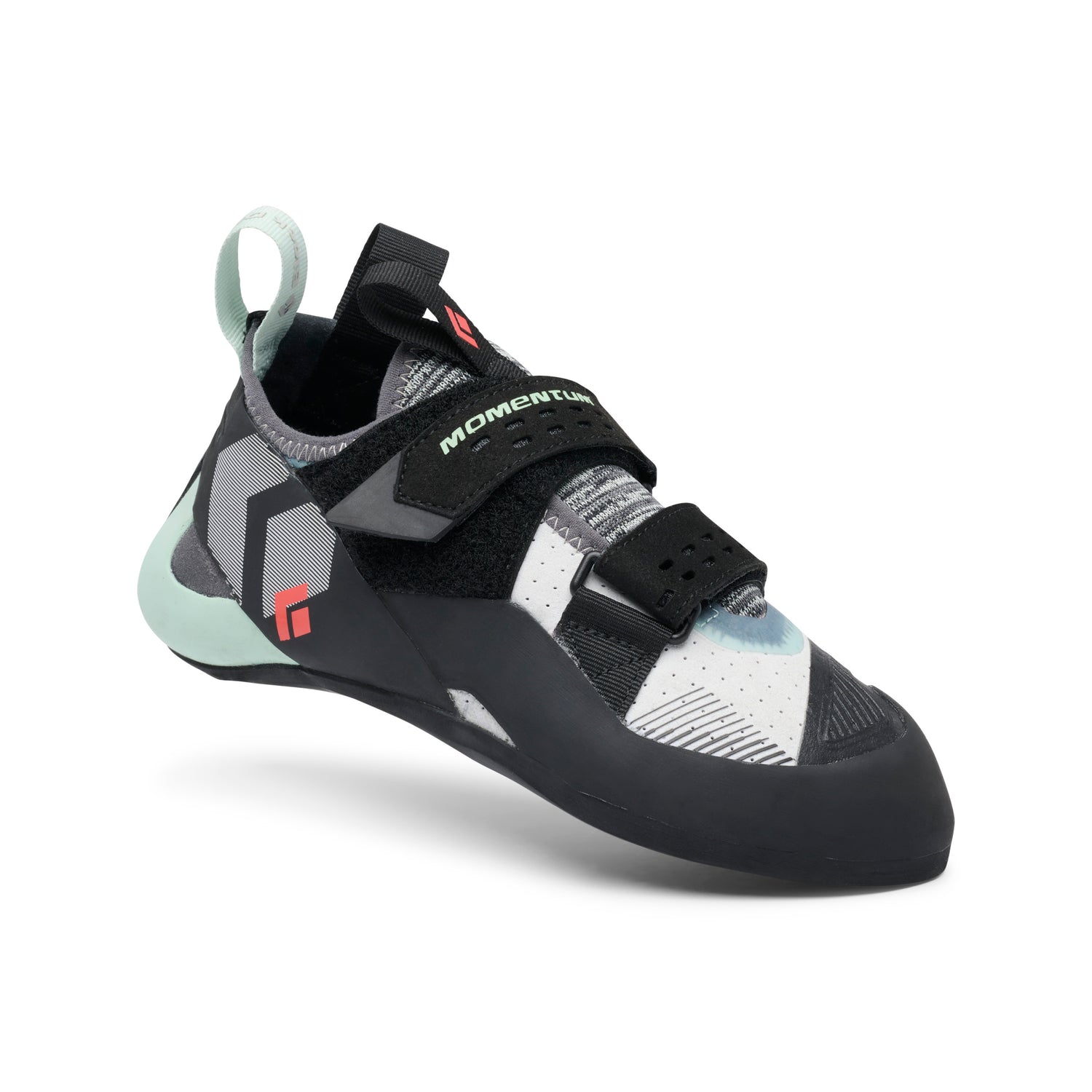
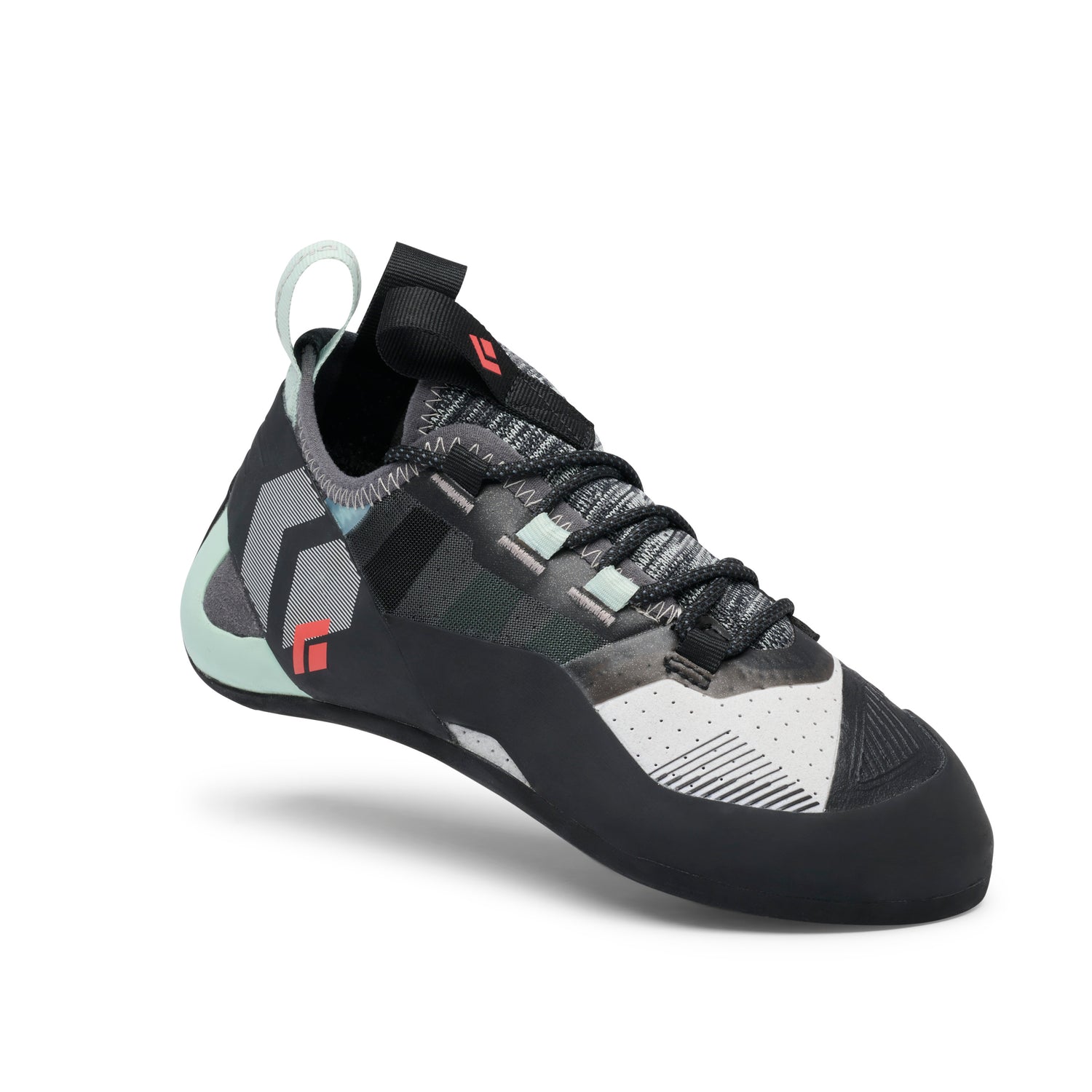
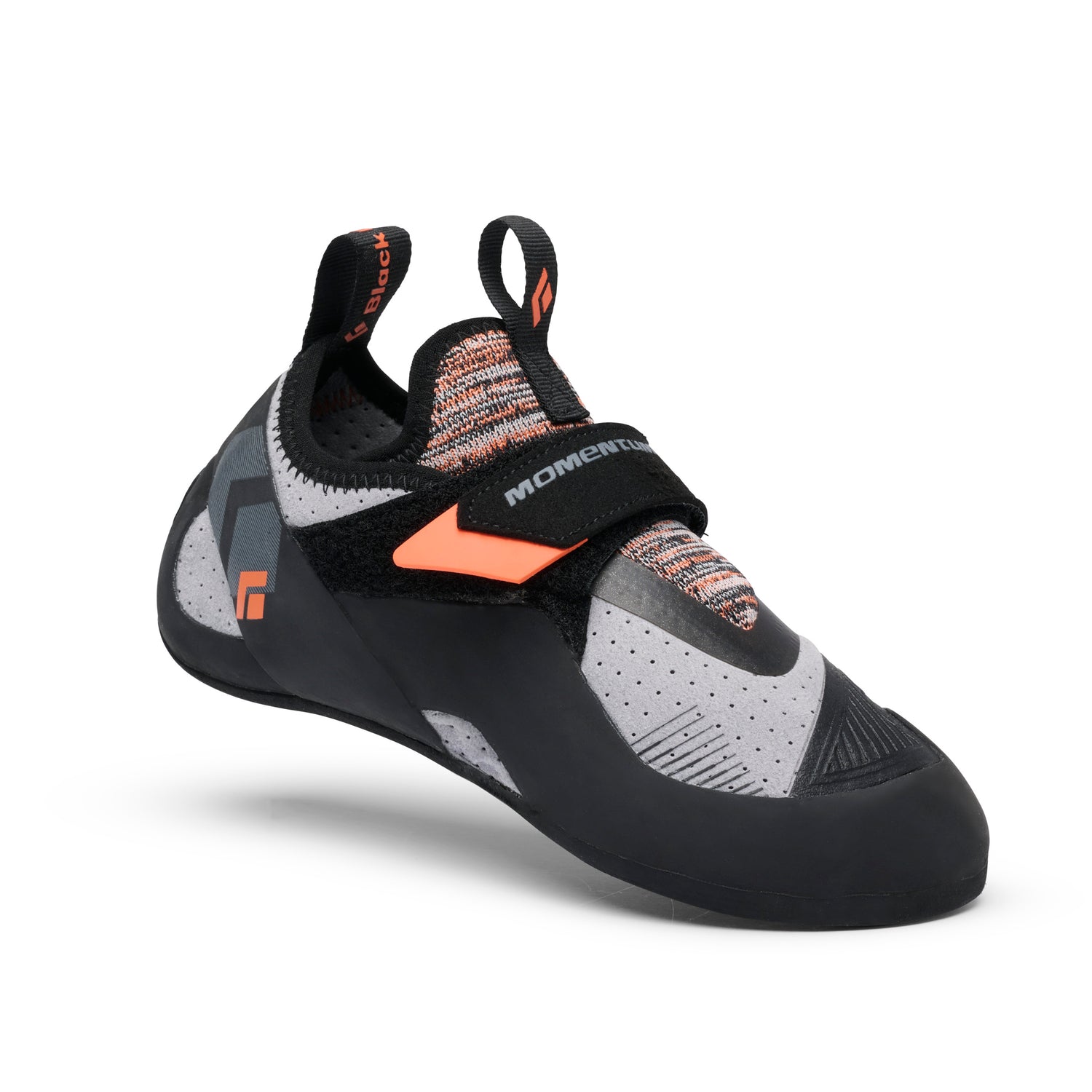
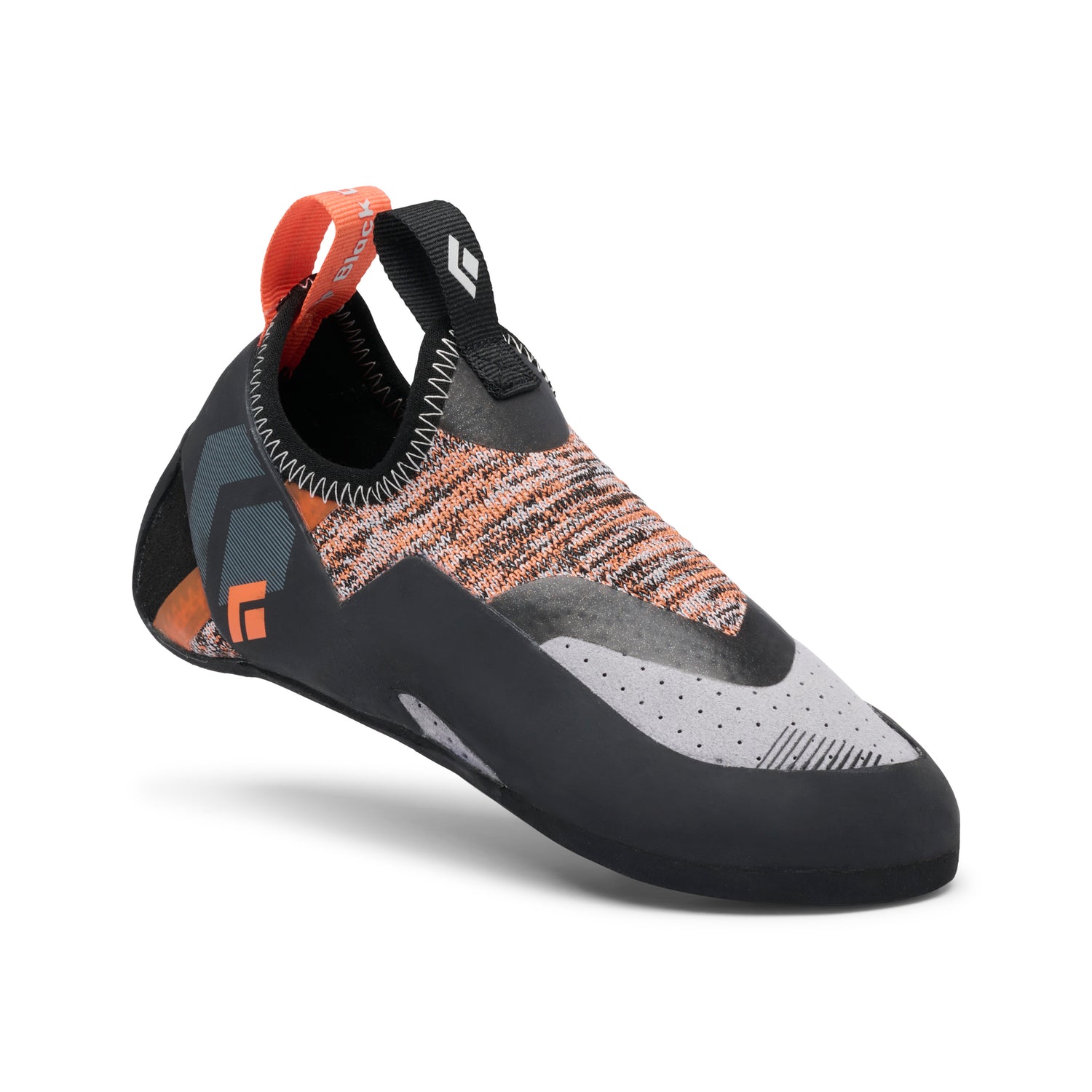
As a new climber, comfort is king. If your feet hurt, you’ll just be dreaming of taking your shoes off rather than focusing on the climbing itself! With this in mind, we designed the Momentum and the Momentum Lace climbing shoes to perform on a variety of terrain while remaining comfortable. Both of these shoes feature a Micro suede upper that will mold to your unique foot shape, but won’t stretch. The Engineered Knit tongue allows for breathability. The mid flex, "molded" blackLabel rubber midsole makes for a comfortable fit while still providing support for edging and sensitivity. Our Momentum climbing shoes are the perfect option for your first pair of climbing shoes, but they could be your only pair for years of climbing.
VERSATILE SHOES FOR SPORT CLIMBING
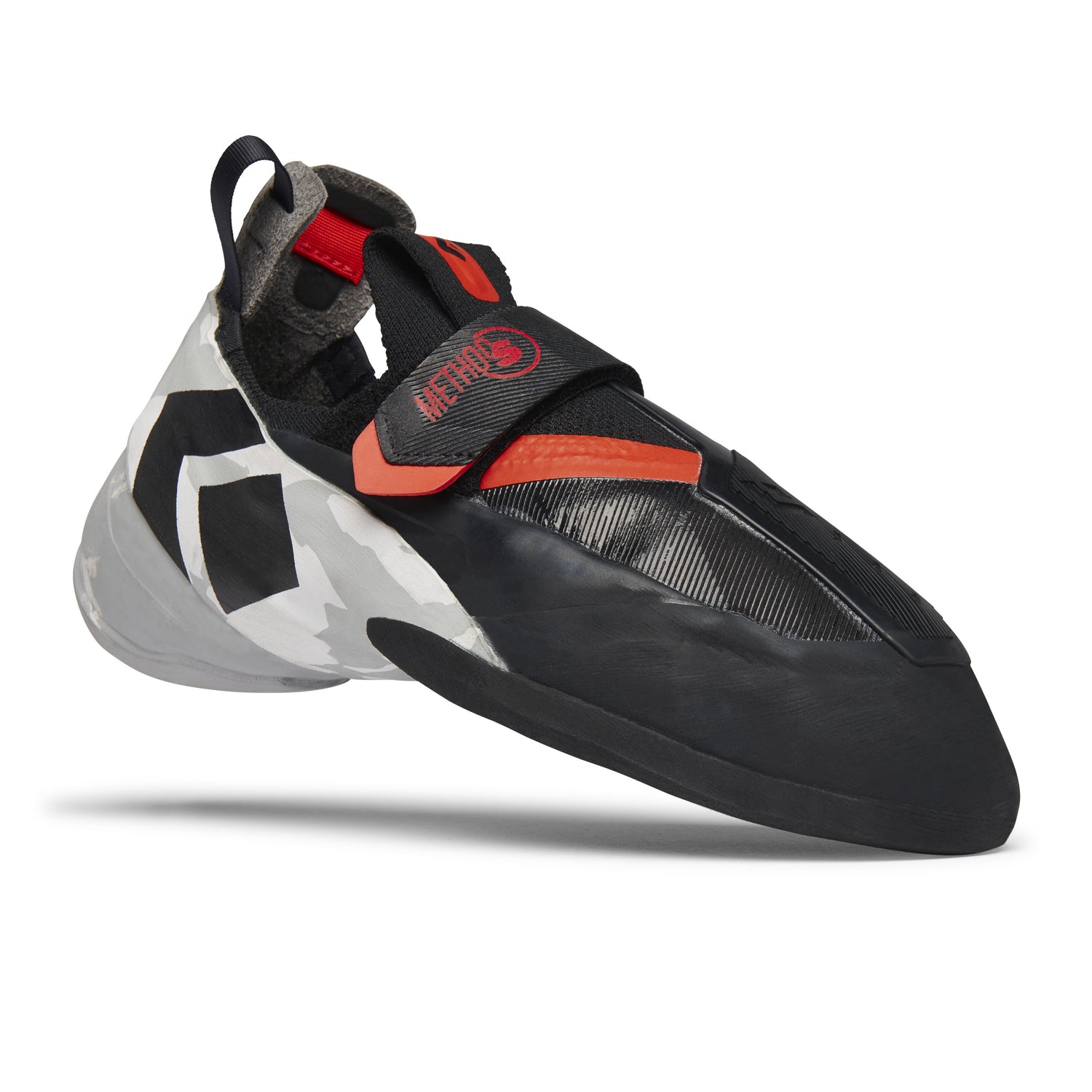
If you’re a climber who bounces around between different areas with different types of climbing, a single shoe that works for various styles is ideal. Sticking with one pair of shoes keeps it simple, with one break-in period and one fit to get used to. With a molded heel for heel hooking, a padded tongue, and a stiff toe box with a slight downturn, the Method is the ideal one-shoe-quiver. This shoe really shines in vertical to slightly overhanging terrain, but its design is adaptable to a full range of climbing situations. The single Velcro strap makes for easy transitions between climbs and the knit upper feels soft next to skin.
AGGRESSIVELY SHAPED SHOES FOR STEEP CLIMBING
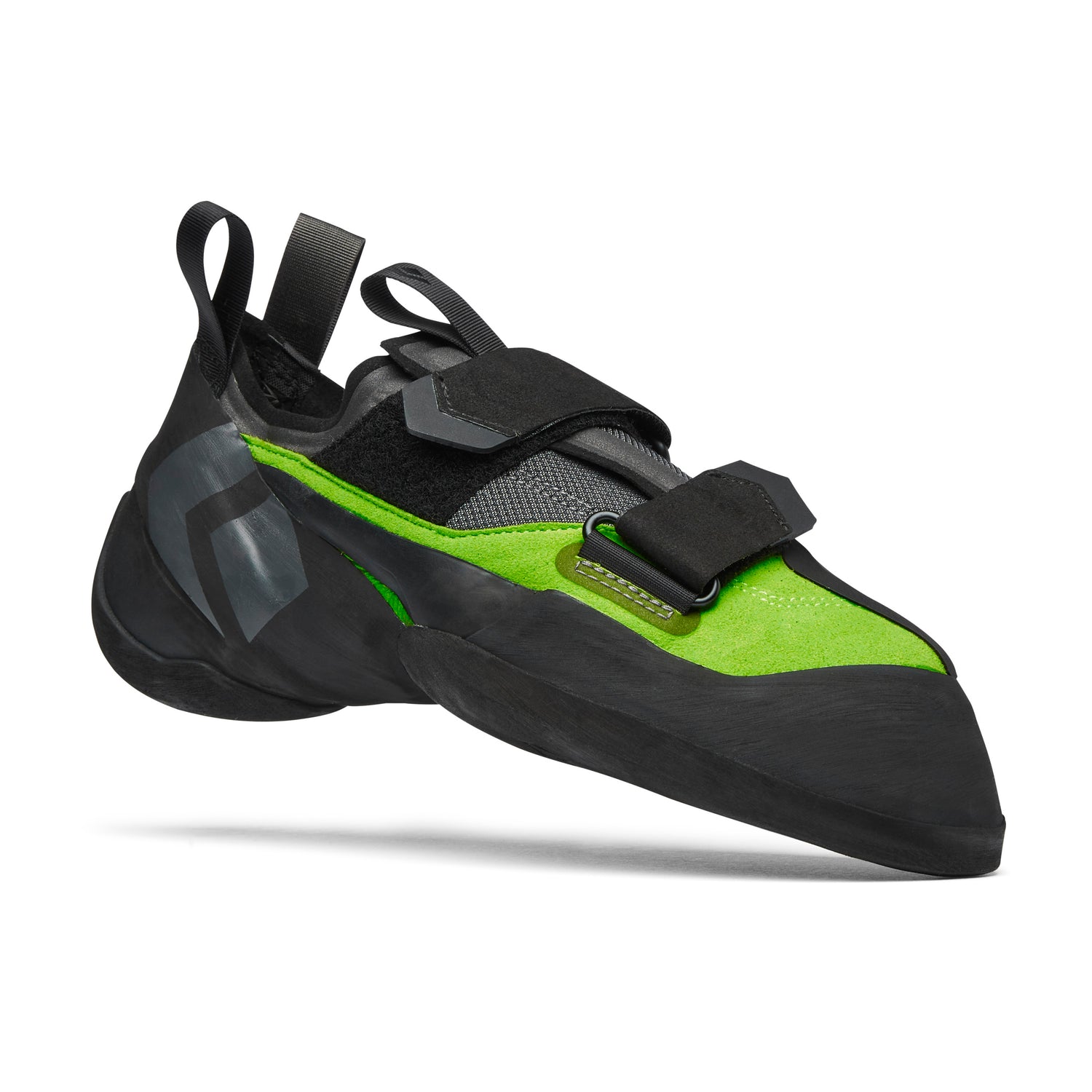
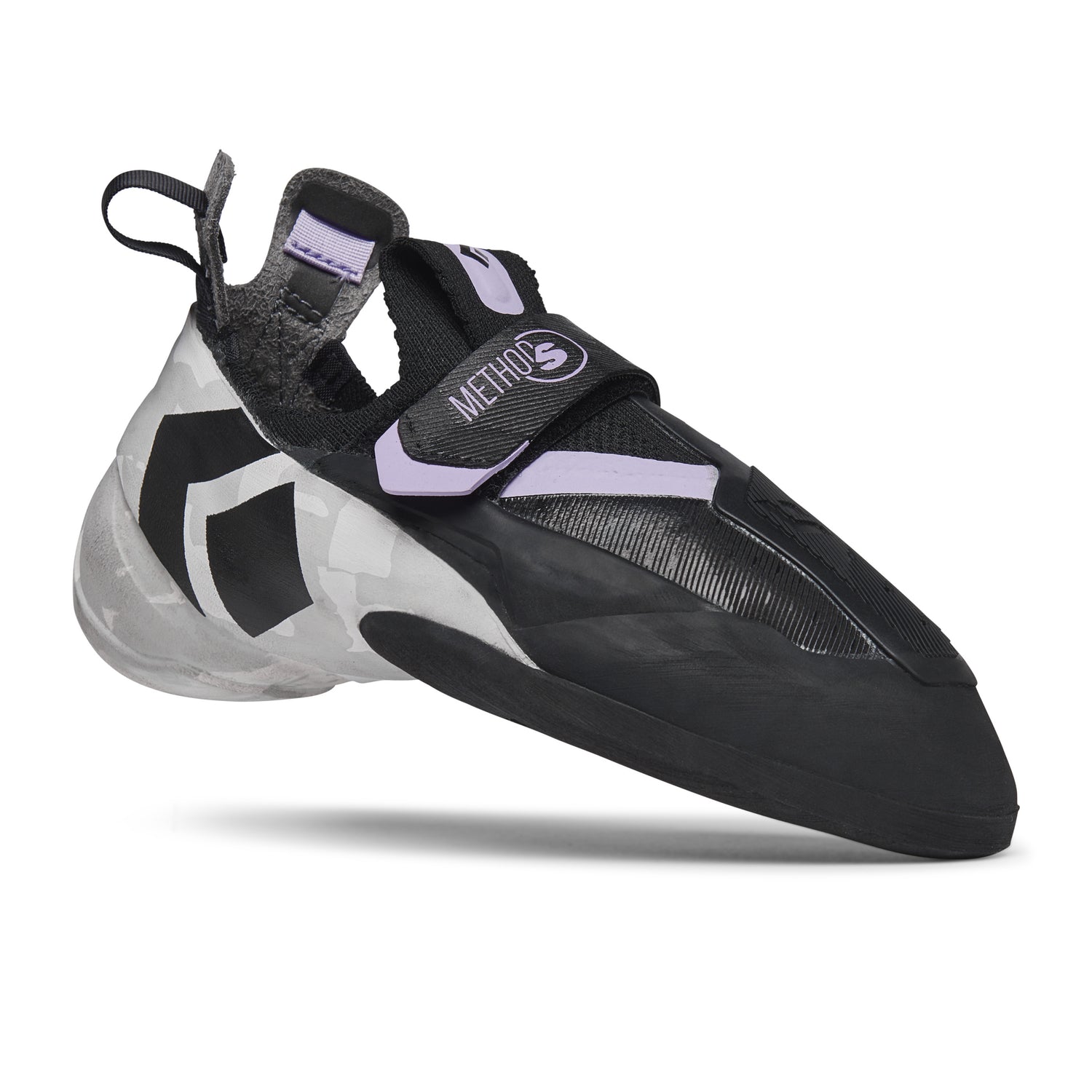
For those who dream of toe hooks, heel hooks, kneebars, and other steep climbing trickery, the Method S is the obvious choice. A step up from the Method in terms of downturn and asymmetry, this shoe is a steep climbing machine. Plus, the shoe’s single Velcro strap closure makes for easy-on-easy-off between burns.
SHOES FOR TRAD CLIMBING
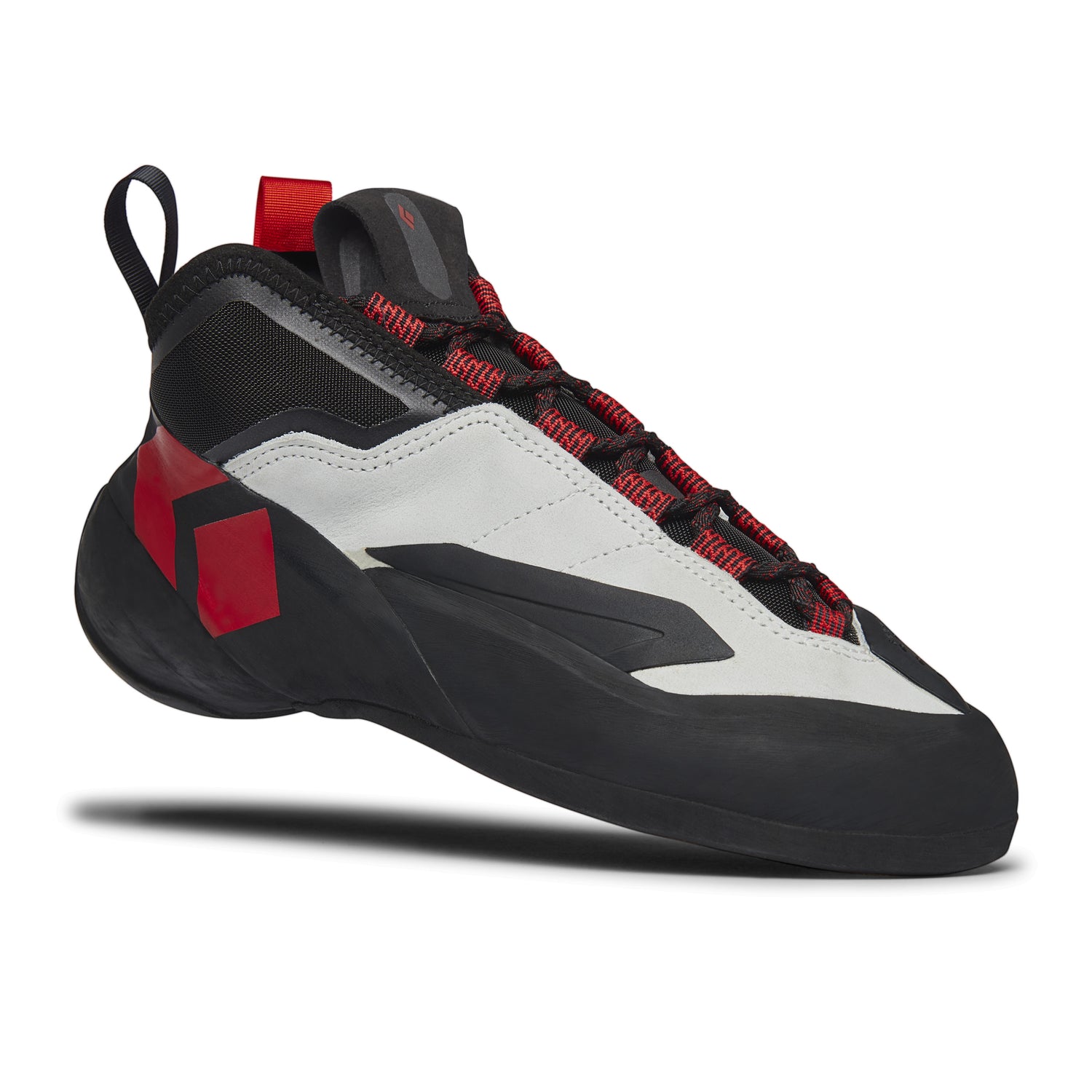
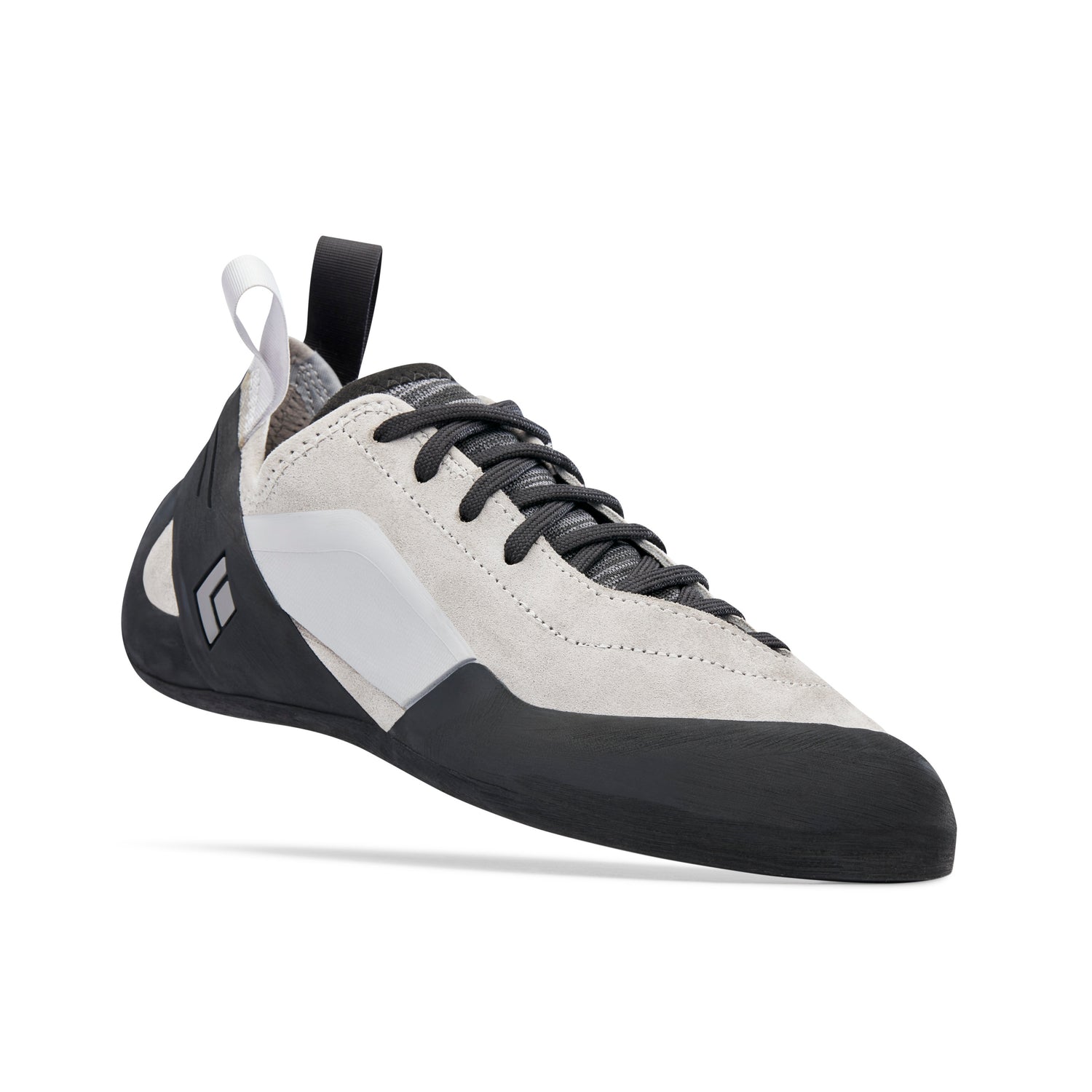
A trad climbing-specific shoe provides support on long routes, protection for all the scuffing and groveling that comes with said long routes, and a relatively stiff sole for standing on tiny feet and smearing. We make two different shoes that fit the bill here: the Aspect and the Aspect Pro. Both feature durable leather uppers, a lace closure to fine-tune the fit, and a stiff rubber sole, making them ideal for steep sandstone splitters and long granite corner systems. The Aspect Pro adds a little more ankle protection and a mesh tongue for added breathability.
THE BOTTOM LINE
Trying on climbing shoes in person is ideal. That way, you can fine-tune your sizing, fit, and feature set and, most importantly, make sure your next pair of shoes is comfortable. As you continue down your climbing path, you’ll probably find that you’ll need a couple of different pairs of shoes, as each model performs in specific ways. It's not a bad idea to start off with a moderately shaped, versatile shoe and then get a more specialized model down the road.
ABOUT THE AUTHOR
Jane Jackson is a writer and editor based in the Sierra Nevada. She loves granite and being in the mountains, and has spent most of her adult life obsessed with rock climbing in all of its forms.
Choosing a selection results in a full page refresh.