PORTRAIT OF THE ARTIST: HEIDI LISTER HEVESY
Inspired by climbing, created by hand, our Spring 2026 prints tell a deeper story.
Add 100 EUR more to quality for free Shipping!
€0,00 EUR
WEDNESDAY, AUGUST 10, 2016
With the cultural hurdles now behind us, poles have become commonplace at most US mountain ultras, but the real reason for that is the advantages of quadrupedalism are hard to deny.
Video: Cole Taylor, Images: Andy Earl
I ran my first ultra in the summer of 2007, the Where’s Waldo 100K in Oregon. I somehow convinced the race director at the time, Craig Thornley, to let me run despite the fact that I was only 24 years old and had never entered a race before.
I showed up at the starting line wearing a pack that contained all the food I’d need for the entire race. I wasn’t yet aware of the full buffet style aid stations you encounter every five or so miles on these types of events. I was also the only person in the race carrying a pair of trekking poles. I grew up in France and had just recently moved to the US. In Europe, poles were (and still are) the norm for any type of long distance trail running race, whereas runners stateside favored double fisting handheld water bottles. While I felt a little out of place click-clacking along with my sticks, I certainly was grateful to have them when my IT band seized up midway along the hilly course.
It would take several years for the use of poles to popularize on the US ultrarunning scene. The shift occurred partly in response to European runners’ dominance at races like the Ultra Trail du Mont Blanc. US competitors began to adopt the Euro methods in an attempt to better their own performances. Adding to that, Nick Clark, a British ultrarunner and US transplant, coined the term wizard sticks when referring to his trekking poles, which gave the old walking canes some much-needed flair and a new level of cool.
With the cultural hurdles now behind us, poles have become commonplace at most US mountain ultras, but the real reason for that is the advantages of quadrupedalism are hard to deny.
Beyond the French-touch of the early Waldo days, I still use poles on most of my mountain endeavors because they are light, stiff, and packable. The bottom line is that they simply work really well for my needs.
--BD Athlete Joe Grant
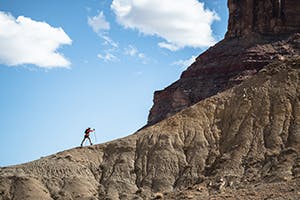
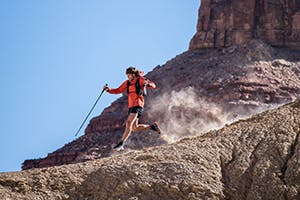
When I need them, I whip them out of my pack like a pair of samurai swords. I pole hard to propel myself up steep grades and use them for stability and balance when contouring on uneven terrain. Sometimes, to save my legs, I even use them on downhills, jump-turning down scree gullies with zeal like it’s mid-winter and I’ve got longer planks on my feet.
Inspired by climbing, created by hand, our Spring 2026 prints tell a deeper story.
Basic field maintenance and repair tips for your climbing skins from our Reroute team.
Watch Connor take down another classic testpiece on the Empath cliff in Kirkwood, California.
Follow BD Athlete Yannick Glatthard deep into the Swiss Alps as he shares his home...
Follow BD Athlete Yannick Glatthard deep into the Swiss Alps as he shares his home mountains with close friends.
Follow Dorian Densmore and Mya Akins for another winter season of steep Alaskan spines, backyard...
Follow Dorian Densmore and Mya Akins for another winter season of steep Alaskan spines, backyard couloirs, and deep adventures in the mountains.
Watch BD Athlete Alex Honnold throw down on some hard trad high above Tahoe.