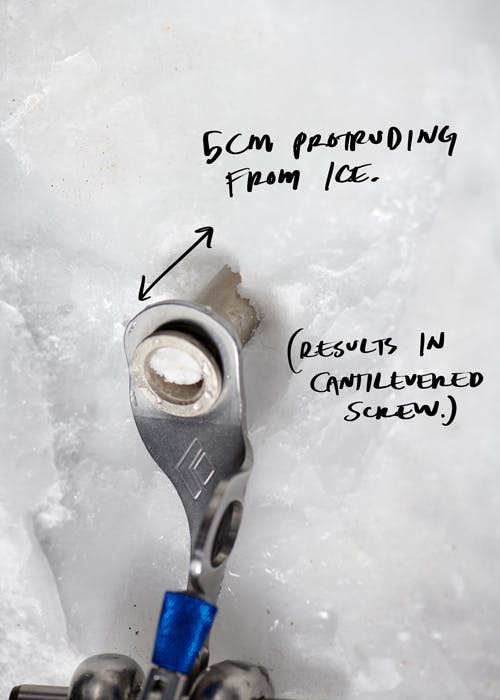
If you have been leading ice long enough you’ve most likely had a screw hit rock before the hanger was flush with the ice. Not only are you bummed because you likely just damaged the razor-sharp teeth of your screw; you now have some options to weigh. What if you don’t have a shorter screw? What if there’s no thicker ice nearby? You have some options – down climb to thicker ice, continue climbing up to thicker ice, or, as a last resort place the screw you have and tie it off or clip the hanger. Before we get into which option is best, we first need to understand how ice screw placements fail.

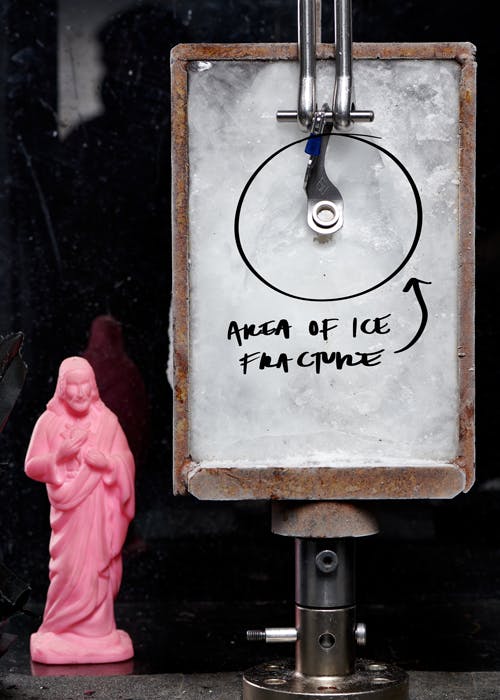
Ice screws themselves are very strong, but they rely on the support of the surrounding ice which can be highly variable. In a textbook placement, with the hanger flush to the ice, an applied load will stress the ice surrounding the screw and eventually cause the ice to fail and fracture in the shape of a cone around the last 3-5 centimeters of the screw nearest to the hanger.   Once this occurs, the exposed section of the screw body becomes cantilevered and no longer supported by ice. The now cantilevered screw body, unable to support the load alone, will begin to bend until the hanger is levered off the head, the screw body fails, or the screw pulls out of the ice.

How strong is a tie off vs clipping the hanger?

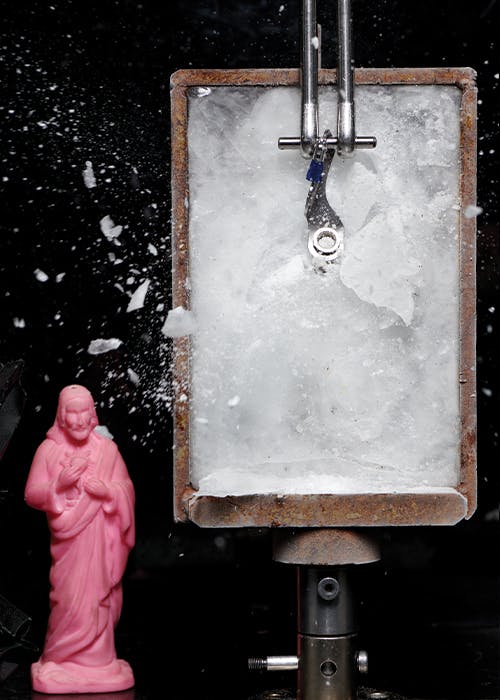
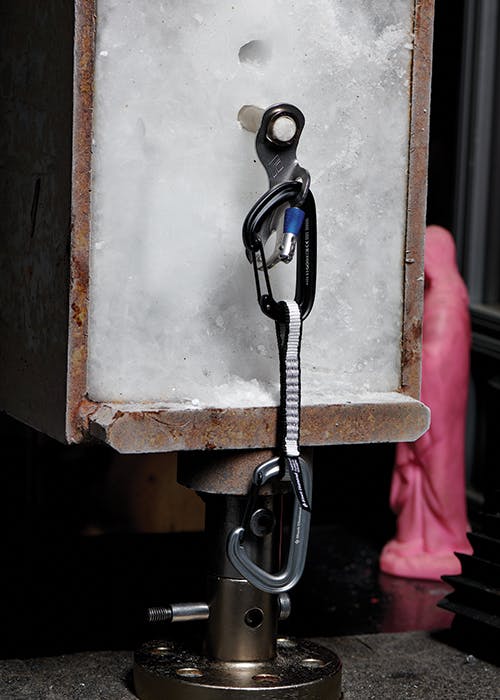
To answer this question, we headed into the QA lab to do a few quick tests and evaluate the tied-off vs clipped strength for both the BD Express (steel) and the BD Ultralight (aluminum) ice screws when placed in ice with screwtrusion. This data must be taken with a grain of salt because we’re talking about a very limited data set which is not statistically significant. It is also important to keep in mind that this testing was conducted in laboratory ice, which is solid, homogenous, and doesn’t have the same inconsistencies that are often found in the wild.

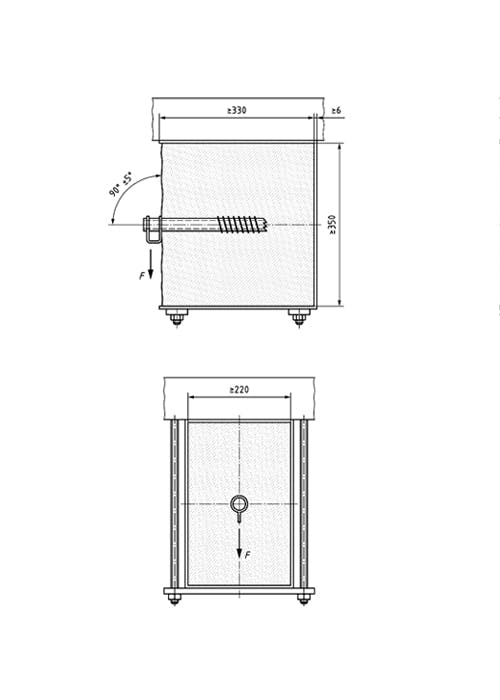
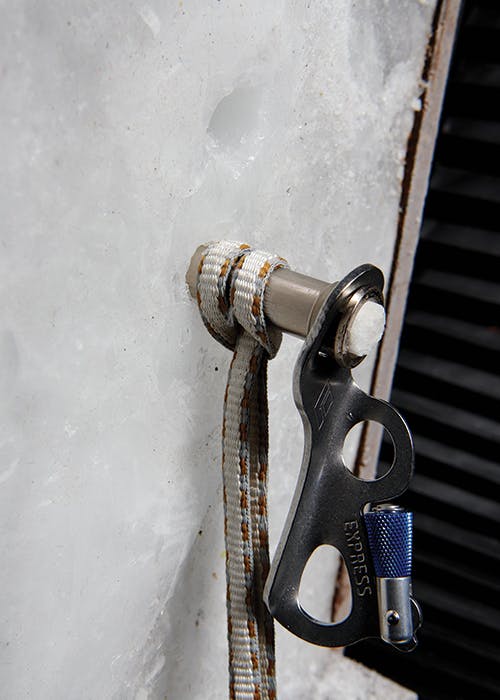
First, let’s examine the strength of both aluminum and steel screws when placed flushed to the ice, and then when placed with 5cm of screwtrusion. Three samples of both the 16cm aluminum and 16cm steel screws were tested in each configuration. For the sake of consistency, all test samples were placed perpendicular to the ice surface (at 0 degrees) per the EN568 standard test method.

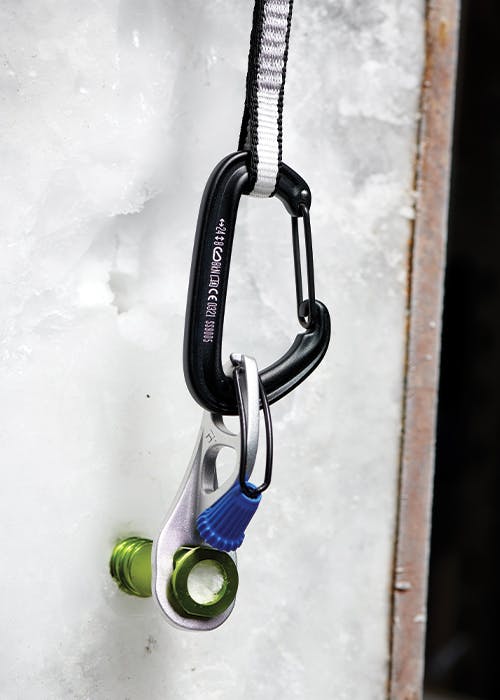
Strength when clipping the hanger of a cantilevered screw:

Also, es ist nicht so stark, aber ist es stark genug?

Unter Bezugnahme auf die passiven und aktiven Richtlinien zum Felsenschutz beträgt die minimale Haltekraft, die sicher als laufende Sicherung verwendet werden kann, 7kN (siehe Anhang A der EN12276). Die Stahl BD Express Schrauben führen zu Spitzenbelastungen, die durchgängig über der 7kN-Marke liegen, bei 5cm von Schraubenextrusion. Unter Berücksichtigung der oben genannten Running Belay-Richtlinien ist es für dich wahrscheinlich in Ordnung, wenn Stahlschrauben leicht herausragen. Allerdings gilt das nicht für die ultraleichten Eisschrauben aus Aluminium. Weitere Tests und Regressionsanalysen zeigen, dass die Aluminium Ultralight Eisschrauben diese Haltekraft nur dann bieten, wenn sie 3.5cm oder weniger aus der Eisoberfläche herausragen.

Es ist erwähnenswert, dass es zwar möglich ist, im Feld Lasten von über 7kN zu erreichen, aber das ist nicht üblich. Selbstverständlich gilt das altgediente Mantra beim Eisklettern – der Leader darf nicht fallen. Mit vielen scharfen Sachen an deinem Körper zu fallen, ist quasi ein Rezept für Verletzungen…

So it’s not as strong, but is it strong enough?

Using the passive and active rock protection guidelines as reference, the minimum holding force to be safely used as a running belay is 7kN (refer to Annex A of EN12276). The steel BD Express screws result in peak loads consistently above the 7kN mark with 5cm of screwtrusion. Given the above running belay guidelines, you’re probably ok with steel screws protruding slightly.  However, this is not the case for the aluminum ultralight ice screws. Further testing and regression analysis reveals that the aluminum Ultralight ice screws will provide this holding force only when protruding 3.5cm or less from the surface of the ice.

It is worth noting that although achieving loads in the field upwards of 7kN is possible, it is not common. It should go without saying that the old school mantra for ice climbing still stands – the leader shalt not fall.  Falling with lots of sharp things attached to your body is a recipe for injury…

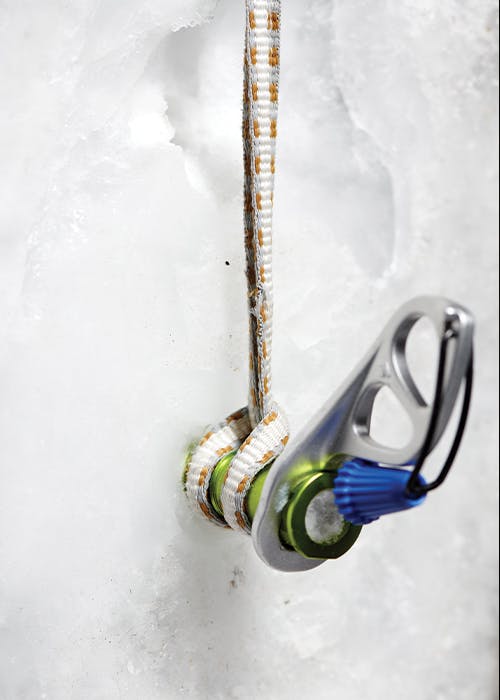
Strength of a tie off:

Unter idealen Laborbedingungen sind Befestigungen sicherlich stärker als angesetzte Haken, wenn sie 5cm aus dem Eis ragen. Allerdings sollte man diese Methode aufgrund der vielen Faktoren, die die Festigkeit beeinflussen, möglichst vermeiden. Wenn du keine kürzere Schraube hast und gezwungen bist, eine Befestigung vorzunehmen, dann achte darauf, dass die Schraube senkrecht oder in einem negativen Winkel eingesetzt wird – auch wenn das bedeutet, dass du sie herausziehen und neu im Eis verankern musst. Es ist entscheidend, dass mindestens 10cm der Gewinde in hochwertigem Eis sitzen. Entferne verdächtiges Oberflächeneis und benutze für zusätzliche Stabilität eine Stahlschraube. Zum Schluss geh sehr vorsichtig vor, damit die Schlinge straff am Eis anliegt. Eine kürzere Schraube, die bis zum Anschlag im Eis verankert ist, ist immer stärker als eine lange Schraube, die lediglich befestigt wurde.

Examples of how to evaluate the quality of ice:

Conclusions:

NOTE: The following only applies to 16cm or longer screws which are placed in at least 10cm of good quality ice. Screws less than 16cm in length do not have enough thread engagement to support the screw once the ice cones out.

  • Steel and aluminum ice screws meet the EN standard requirement of 10kN when placed in good ice and buried to the hanger
  • With 5cm of screwtrusion, and tested by loading the hanger, both steel and aluminum screws’ ultimate strength is significantly reduced. For aluminum screws, field achievable loads have potential to cause failure.
  • With 5cm of screwtrusion, and tested by tying off the screw, both steel and aluminum screws' ultimate strength is significantly reduced. The reality of the sling sliding towards the hanger during a fall must be considered. The results of a fall are highly variable due to sling movement. Tie offs should be avoided if possible.
  • If a 16cm or longer steel screw protrudes less than 5cm, clip the hanger. If it protrudes more than 5cm, you do not have a shorter screw, and are forced to do a tie off - ensure the screw is placed perpendicularly or at a negative angle (teeth down), even if that means you must pull the screw and replace it in the ice. It is crucial to clear any suspect surface ice and that at least 10cm of the threads are placed in good quality ice.
  • If a 16cm or longer aluminum screw protrudes less than 3.5cm, clip the hanger. If it protrudes more than 3.5cm, and you do not have a shorter screw, use a steel screw placed in fresh ice if possible and follow the steel ice screw guidelines. If forced to do a tie off, ensure the screw is placed perpendicularly or at a negative angle (teeth down), even if that means you must pull the screw and replace it in the ice. It is crucial to clear any suspect surface ice and that at least 10cm of the threads are placed in good quality ice.
  • A shorter screw buried to the hanger is always stronger than a longer screw protruding from the ice whether the hanger is clipped, or it is tied off.
  • Always clear away any suspect ice and ensure that the entire screw body is seated in good quality ice.

Bottom Line:

  • A longer screw is not always stronger.
  • You should always choose the appropriate length screw, place it with the teeth upwards between 10 and 15 degrees, and bury it to the hanger in good ice.
  • If you are forced to have screwtrusion, whether clipping the hanger or tying it off – it’s best to use a steel screw
  • An unsupported aluminum ice screw body is much weaker than steel.
  • At the end of the day, screwtrusion is bad and you need to exercise more caution when using aluminum ice screws in these situations.

Be safe out there.
Berry